Painting architecture II
Original website record. Dates, status, office details and wording reflect the source page and may be historical.
Visit original page ↗WHO OWNS THE LAND? 2014 SRI LANKA, COLOMBO CLIMATE IS THE ONE WHO START DETERMINE THE LAND OWNERSHIP ?
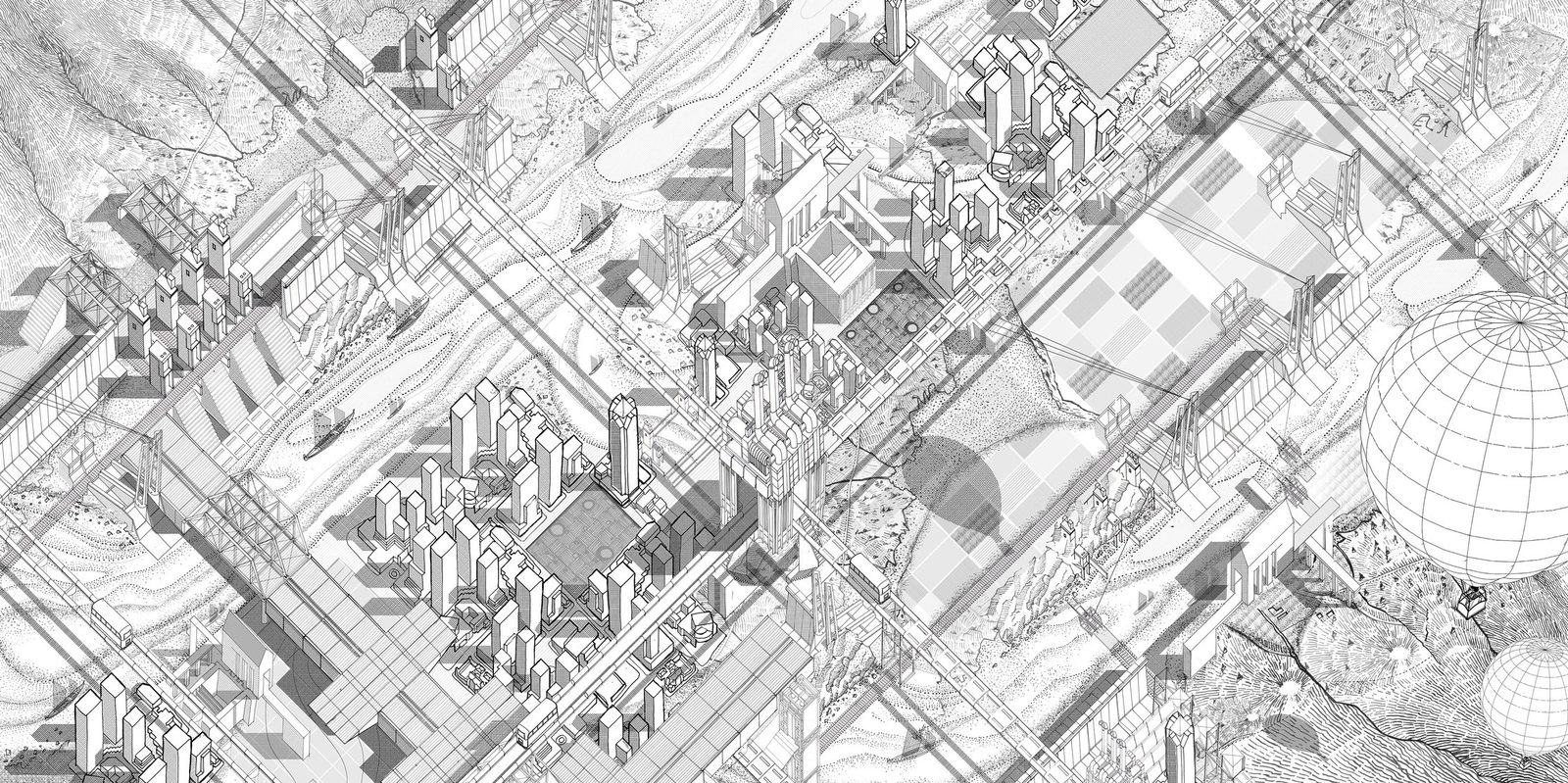
The idea of land ownership is different from the ownership of Man’s personal objects. A land tenure system may designate a parcel of land to be in our possession, but this ownership is established in name only. To be more precise, we are not truly the master of our land, especially not when natural elements are in play. An owner cannot occupy the space during the flood season and is unable to exercise direct control over it, Where you start to let the water defines the boundaries of your usable space. Traditionally we have developed systems to control and contain these fluctuations of water, or even going against the water. However we can try to explore ways that this phenomena can be incorporated into the program of the city in a creative manner. When flooding occurs, can the submerged city become functional? In Sri Lanka, there exist a village that is situated near a lake. During the monsoon season, a Hindu temple in Maskeliya Town is flooded and is therefore unusable. Its normal program only resumes when the flood recedes. Drawing from this event, I began to ask questions of the possibility of an intervention on the destructive effects of flood on human habitation. However, instead of resisting flooding, I propose an architecture that embodies different functions during different seasons, alternating between an occupier space during the dry season and a linkage during the monsoon.
Instead of resisting the floods, which in the future will surely be a permanent seasonal feature of the city, I propose a design that allows the flood to determine the program of the structure. Instead of building upwards to go against the water condition, the design is situated below water level across the river bank and acknowledge this condition during the tidal and monsoon period. The ‘heaviness’ of the water could be used as the main mass to hold up the structure down. During the dry season, you only able to observe things at the opposite bank of the river but it is almost unreachable as the idea of the Hindu temple in Maskeliya town. As the water level is at the minimum level , the platform probably is half under the water During monsoon/ flood , the program fluctuates from a leisure platform into an infrastructure for water storage in anticipation of the dry season.The program of the structure changes into a linkage for the city itself and people can start occupying the below spaces. Suddenly there is a temporary empty space that can be used for other programmes, for example as the location for communal activities or housing a market. It also functions as a bridge between two points previously unreachable due to the flood. The climate is incorporated as an element determining the function of the building.
CREDITS Concept, Design & Direction: Henry Ngo ARCHITECTURAL ASSOCIATION SCHOOL OF ARCHITECTURE, LONDON | 2014
NEXT : TASTING COPENHAGEN